Tools for Online Banner Creation
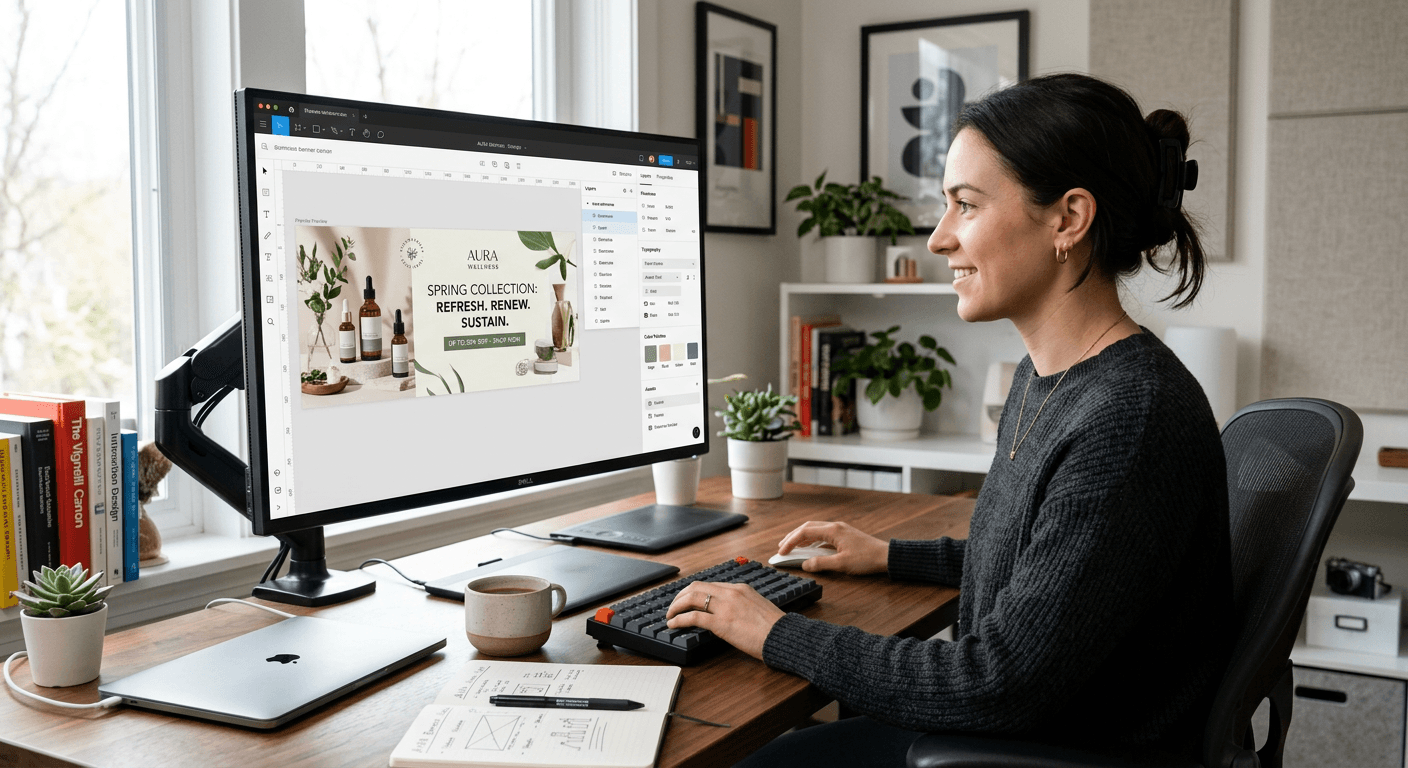
Creating high-performing visual assets is a cornerstone of digital marketing, and the ability to design an effective banner online has become a baseline requirement for any growing business or individual creator. Modern digital strategy relies on professional, eye-catching imagery to capture audience attention in a saturated environment. Whether you are aiming to increase click-through rates on social media or enhance a brand's visual identity on a landing page, selecting the right tool to generate an online-banner is essential for maintaining a consistent and professional aesthetic.

Quick Summary {#quick-summary}
An online banner is a vital digital marketing asset used to drive traffic, promote products, or reinforce brand identity across websites and social media platforms. High-quality tools for banner creation allow users to streamline their workflow, maintain brand consistency, and optimize visual performance without extensive graphic design experience.
- Essential for increasing user engagement and click-through rates.
- Facilitates brand uniformity through customizable templates and design systems.
- Reduces production time and costs compared to traditional agency workflows.
- Enables A/B testing of visual elements to improve overall conversion efficiency.
Table of Contents {#table-of-contents}
- 1. Drag-and-Drop Design Suites
- 2. Browser-Based Vector Editors
- 3. Automated AI Design Platforms
- 4. Professional-Grade Graphic Suites
- 5. Niche Marketing Banner Generators
- 6. Collaborative Asset Management Tools
- 7. Template-First Micro-Design Applications
- FAQ
- Recommended Reads
1. Drag-and-Drop Design Suites {#1-drag-and-drop-design-suites}
Drag-and-drop design suites serve as the industry standard for users who need to create an online banner quickly without mastering complex software. These platforms typically offer massive libraries of pre-built layouts, stock photography, and typography options that can be manipulated in a web browser. By simply moving elements across a canvas, users can align, resize, and group assets to create professional designs that meet specific technical requirements.
This approach matters because it democratizes visual content creation. For online store owners and digital entrepreneurs, the speed at which a campaign can be deployed often determines its success. Using these tools allows creators to iterate on designs in real-time, effectively testing different visual hooks to see what resonates with their audience. When you manage your digital presence through an integrated link-in-bio platform, keeping your banners consistent with your profile design is a seamless process using these suites.
2. Browser-Based Vector Editors {#2-browser-based-vector-editors}
For more granular control, browser-based vector editors provide tools that function similarly to desktop publishing software but operate entirely in the cloud. These editors allow for the creation of scalable graphics, ensuring that your online-banner looks crisp on any screen size, from mobile devices to high-resolution desktop monitors. They provide advanced features like layer management, path editing, and precise color grading.
This level of technical control is vital for brands that require pixel-perfect precision. While drag-and-drop suites are excellent for speed, vector editors are the preferred choice for detailed brand identity work. The impact here is a higher level of visual authority; when a banner is rendered with clean, sharp edges and accurate brand colors, it builds immediate trust with the viewer, directly influencing potential conversion rates.
3. Automated AI Design Platforms {#3-automated-ai-design-platforms}
AI-driven design platforms have shifted the paradigm of banner creation by automating the aesthetic decisions that traditionally required a professional designer. Users input their brand guidelines, target audience, and campaign goals, and the system generates dozens of variations of a banner online. These tools analyze historical performance data to suggest color schemes and layouts that are statistically more likely to perform well.
Efficiency is the primary benefit here. For small business owners managing limited budgets, AI tools minimize the trial-and-error phase of design. By leveraging machine learning, these platforms ensure that every banner is optimized for impact. This allows the creator to focus on broader marketing strategy rather than getting bogged down in the minutiae of pixel placement and font selection.
4. Professional-Grade Graphic Suites {#4-professional-grade-graphic-suites}
Professional graphic suites are comprehensive software ecosystems that include advanced features like high-fidelity image retouching, complex filter layers, and high-end typography manipulation. While these tools often require a steeper learning curve, they offer the ultimate creative freedom for those needing to produce custom artwork from scratch rather than relying on standard templates.
In high-stakes environments - such as long-term brand building or luxury retail - these tools are indispensable. They allow for the creation of unique, proprietary visual styles that cannot be easily replicated by competitors. By mastering these suites, creators can ensure that their online banner inventory serves not just as a promotion, but as a long-term asset that defines their brand’s visual narrative in the marketplace.
5. Niche Marketing Banner Generators {#5-niche-marketing-banner-generators}
Some platforms focus exclusively on the technical constraints of digital advertising, such as file size limits, specific aspect ratios for ad networks, and animation requirements. These niche generators take the guesswork out of compliance. They ensure that any banner online created through the system will be accepted by major advertising exchanges and web platforms without error.
This is a critical advantage for e-commerce brands running frequent ad campaigns. Avoiding technical rejection during the upload process saves hours of rework. These tools allow teams to remain agile, launching new creative assets in minutes rather than days. This reliability is vital when managing a digital presence that requires frequent updates and constant optimization.
6. Collaborative Asset Management Tools {#6-collaborative-asset-management-tools}
Collaboration-first tools allow teams to work on the same banner project simultaneously, integrating feedback loops and version control directly into the design process. These systems are essential for agencies and larger businesses where multiple stakeholders, such as marketing managers and brand directors, must sign off on creative assets before they go live.
Effective collaboration significantly reduces the risk of errors and brand inconsistency. By having a centralized source of truth for assets, teams can ensure that the current online banner is always up-to-date and reflects the latest promotional strategy. This synergy increases the overall quality of output and prevents the fragmentation of the brand’s visual identity across different channels.
7. Template-First Micro-Design Applications {#7-template-first-micro-design-applications}
Micro-design applications are lightweight, purpose-built tools that specialize in specific types of banners, such as social media headers, email signatures, or limited-time promotional web banners. They prioritize simplicity and mobile-first design, allowing users to create assets directly from their smartphones or tablets.
These tools are ideal for influencers and small businesses that operate on the go. They prioritize ease of use, often stripping away advanced technical features in favor of intuitive, template-led design. The real-world impact is lower barrier-to-entry; anyone can produce a professional-looking banner in seconds, ensuring that a brand remains active and visually engaging even during fast-paced social media cycles.
FAQ {#faq}
-
What is the most important factor when creating an online banner?
Clarity and relevance are paramount. Your banner must communicate the value proposition immediately and align perfectly with the target audience's expectations. -
Should I use a template or design from scratch?
For consistency and speed, templates are excellent. However, for unique brand storytelling, designing from scratch or heavily customizing templates is recommended. -
How do I know if my banner is effective?
Use integrated tracking tools to monitor click-through rates. A/B testing different headlines or visuals is the most reliable way to measure effectiveness.