Creative Web Design Styles: Brutalism and Beyond
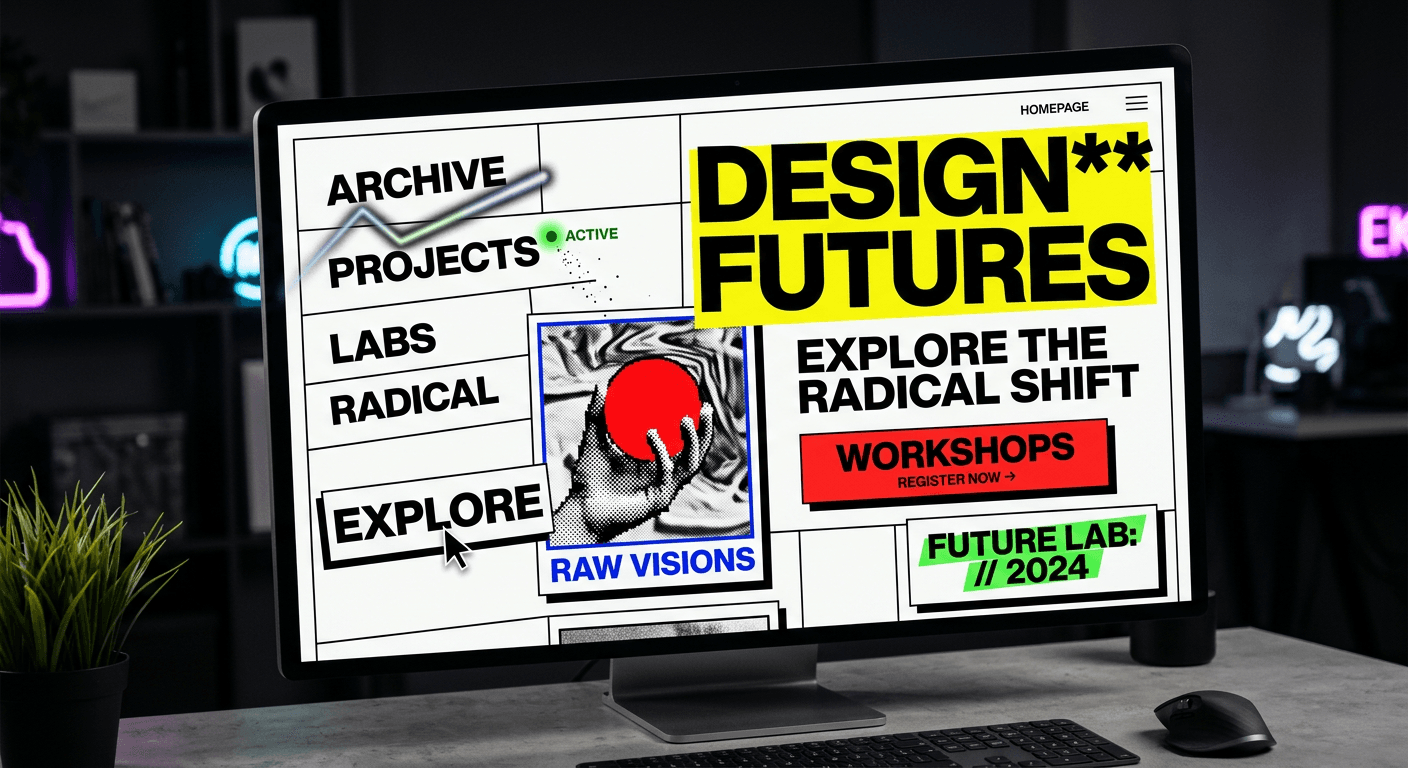
Modern digital aesthetics represent a constant push-pull between polished corporate minimalism and the raw, unfiltered expression of design movements like brutalism. Understanding how to design a website today requires more than just mastering software; it demands a strategic grasp of visual communication, user behavior, and the cultural context of emerging web trends. By analyzing the evolution from grid-based rigidity to the chaotic beauty of brutalist web design, creators can better navigate the landscape of award winning websites design to build high-impact digital experiences.
Quick Summary {#quick-summary}
Brutalist web design is a digital aesthetic characterized by a raw, unpolished, and intentionally stark appearance that rejects traditional UI/UX conventions in favor of maximalist expression. It prioritizes ideological transparency over corporate slickness, often utilizing harsh typography, high-contrast color palettes, and exposed structural elements to evoke a visceral user reaction.
- Rejects conventional aesthetic "rules" in favor of functional honesty.
- Utilizes system-default fonts and rigid layouts to create a sense of digital rawness.
- Prioritizes content hierarchy over decorative padding and whitespace.
- Challenges users to engage with information through disruption rather than comfort.
Table of Contents {#table-of-contents}
- Quick Summary
- The Origins and Philosophy of Brutalism
- The Mechanics of Intentional Disruption
- Beyond Brutalism: Modern Aesthetic Shifts
- Balancing Radical Design and Functional Utility
- Comparative Analysis of Web Design Styles
- Real-World Insights and Practical Application
- Frequently Asked Questions
- Recommended Reads

The Origins and Philosophy of Brutalist Web Design {#the-origins-and-philosophy-of-brutalist-web-design}
Brutalist web design draws its name and spirit from the mid-20th-century architectural movement characterized by raw concrete structures and honest, unadorned utility. In the digital realm, this translates to a refusal to hide the "gears" of the internet. While contemporary web design typically aims to be frictionless and invisible, brutalism aims to be noticed by being intentionally abrasive, unpolished, or stripped back to the bare essentials of HTML.
This movement emerged as a reaction against the homogenizing effect of design templates and the corporate obsession with "clean" user interfaces. Designers began to experiment with default browser styles, broken grids, and jarring color combinations to recapture the chaotic, exploratory spirit of the early internet. For those learning how to design a website, studying this philosophy is essential because it highlights the difference between aesthetic trends and the underlying structural intent of digital content. You can explore more about digital branding tools at heylink.eu.com to see how brands differentiate themselves.
The Mechanics of Intentional Disruption {#the-mechanics-of-intentional-disruption}
Executing a brutalist site requires more than just creating a messy interface; it involves a calculated manipulation of user perception. Designers often employ high-contrast color schemes, such as primary colors against stark white or jet-black backgrounds, to force the eye to track specific elements. By abandoning the "safe" choices found in modern UI kits, developers regain control over the narrative of their pages.
Typography in this style is frequently oversized or intentionally mismatched. The use of mono-spaced fonts is a hallmark, referencing the raw code-based roots of web development. Unlike standard corporate sites that prioritize whitespace to reduce cognitive load, brutalist designs often fill the viewport with text and media, creating a "wall of content" that demands the user navigate it actively. This forces a shift from passive scrolling to intentional engagement, which is why many award winning websites design portfolios incorporate these elements to demonstrate technical and creative fearlessness.
Pro Tip: When experimenting with radical aesthetics, always ensure that your core functional navigation remains accessible to assistive technologies, even if the visual layout is unconventional.
Beyond Brutalism: Modern Aesthetic Shifts {#beyond-brutalism-modern-aesthetic-shifts}
As the industry matures, we are seeing a move "beyond" pure brutalism toward a fusion of raw aesthetics and refined interactivity. This is often termed "neo-brutalism" or "modern brutalism," where the jagged edges of the original movement are softened by sophisticated motion design and refined typography. This evolution allows brands to project an image of being "edgy" or "authentic" while still meeting the functional expectations of a standard consumer.
In this modern landscape, designers are incorporating complex scroll-triggered animations and fluid transitions to bridge the gap between static raw design and immersive storytelling. The goal is to provide a user experience that feels handcrafted and unique while avoiding the frustration that can arise from broken navigation. This hybrid approach is increasingly popular for creative agencies looking to showcase their versatility.
Balancing Radical Design and Functional Utility {#balancing-radical-design-and-functional-utility}
The biggest risk in unconventional web design is sacrificing usability for novelty. If a user cannot find the primary call-to-action because the design is too "disruptive," the project has failed its primary business goal. Effective designers use radical aesthetics as a highlighter, not as an obstacle. By identifying the core conversion points of a site, you can frame them in a standard, recognizable way while letting the surrounding periphery embrace a more brutalist approach.
Integrating accessible design principles is non-negotiable. Even when a site looks unconventional, the underlying Document Object Model (DOM) must remain logical. Screen readers and search engine crawlers do not care about the visual chaos; they rely on well-structured HTML tags. Maintaining this technical foundation allows you to experiment with visual layers without compromising the reach of your digital asset.
Comparative Analysis of Web Design Styles {#comparative-analysis-of-web-design-styles}
| Style | Focus | Primary User Benefit | Drawback |
|---|---|---|---|
| Minimalism | Clarity and whitespace | Reduced cognitive load | Can feel generic or cold |
| Brutalism | Raw, unpolished honesty | High brand memorability | Risk of poor usability |
| Neo-Brutalism | Fusion of raw and refined | Engagement through novelty | Requires high technical skill |
| Corporate | Scalability and convention | High conversion predictability | Easily forgotten |
Real-World Insights and Practical Application {#real-world-insights-and-practical-application}
When working on high-traffic projects, it is rarely advisable to go full brutalist on the primary user journey. Instead, consider using these aesthetics for landing pages or campaign-specific sites where brand identity is the priority over long-term retention. These "satellite" sites act as creative playgrounds. You can find inspiration by reviewing the structures of popular link-in-bio services at heylink.eu.com to understand how minimalism meets functional output.
Consistency remains the key to brand success. If your design choice is "messy," make sure that messiness is curated rather than accidental. Every off-grid image and bold font choice must feel like a deliberate creative decision. When clients question these choices, frame the design in terms of brand differentiation - explaining that in a sea of identical, template-based websites, a brutalist approach is an essential tool for cutting through the noise.
Frequently Asked Questions {#frequently-asked-questions}
Is brutalist web design bad for SEO?
Not inherently. SEO is primarily driven by content quality, technical performance, and site architecture. If your site follows proper header hierarchy and accessibility standards, the aesthetic choice has minimal impact on rankings.
Why do some brands choose a brutalist look?
Brands choose this aesthetic to signal authenticity, creative fearlessness, and a rejection of "corporate" tropes. It is an effective way to stand out in creative industries.
Can I use brutalist design for e-commerce?
Yes, but proceed with caution. Ensure that critical paths, such as the checkout process and product navigation, remain intuitive to avoid increasing cart abandonment rates.
What is the difference between brutalism and neo-brutalism?
Brutalism is intentionally raw and often "ugly" by design standards. Neo-brutalism incorporates these raw elements but pairs them with modern interactive features, improved readability, and a more polished technical finish.