Choosing the Best Web Design Agency for Your Business in 2026
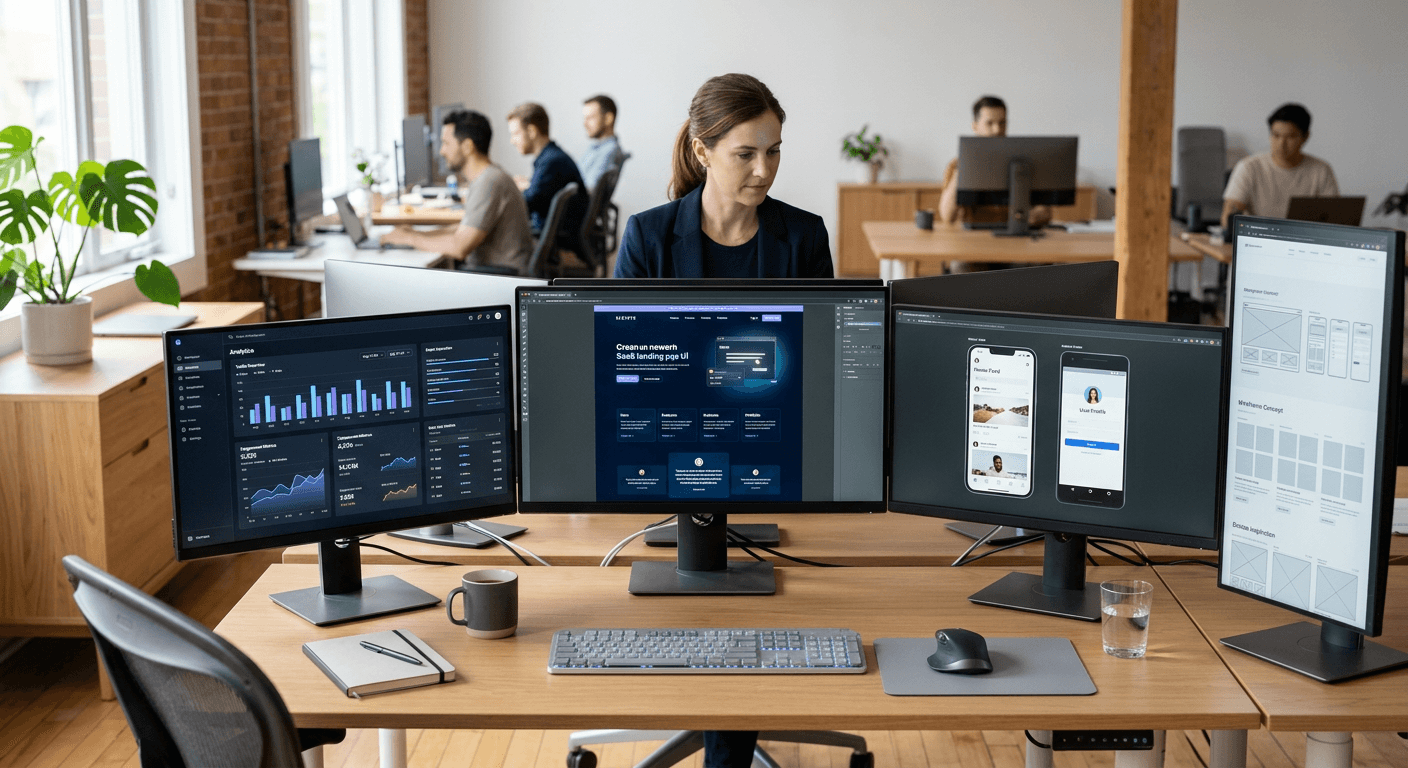
Selecting the right web design agency is a pivotal decision for any modern enterprise looking to establish a robust digital footprint. In 2026, the landscape of digital presence has evolved far beyond static pages; it now encompasses integrated analytics, mobile-first optimization, and seamless conversion funnels. Whether you are a small business owner or a scaling e-commerce brand, finding a professional website design service that aligns with your specific growth objectives is essential for operational efficiency.

Quick Summary {#quick-summary}
Selecting a professional web design agency involves evaluating technical expertise, industry-specific experience, and long-term scalability. The right partner should provide more than just aesthetics; they must deliver high-speed, secure, and conversion-optimized digital hubs that grow alongside your business.
- Prioritize firms with proven track records in your specific market vertical.
- Ensure the scope includes mobile responsiveness, SEO, and integrated performance tracking.
- Look for transparent, scalable pricing models that avoid hidden long-term overhead.
Table of Contents {#table-of-contents}
- Comparison of Web Design Categories
- Full-Service Creative Agencies
- Performance-Driven E-commerce Specialists
- Specialized SME Landing Page Platforms
- In-House vs Outsourced Web Design
- How to Choose the Best Web Design Agency
- FAQ
- Recommended Reads
Comparison of Web Design Categories {#comparison-of-web-design-categories}
| Category | Core Focus | Pros | Cons | Ideal Audience |
|---|---|---|---|---|
| Full-Service Agencies | Brand Strategy | Comprehensive, bespoke solutions | Expensive, long timelines | Enterprise, large-scale brands |
| E-commerce Specialists | Conversion Rates | High ROI, data-focused design | Often locked into specific stacks | Online stores, retailers |
| Landing Page Platforms | Speed & Efficiency | Affordable, fast deployment | Limited deep customization | Creators, influencers, small businesses |
Full-Service Creative Agencies {#full-service-creative-agencies}
Full-service agencies operate as strategic partners. They handle everything from brand identity and UX research to complex back-end development. By engaging a firm of this caliber, businesses receive a cohesive digital ecosystem where the website serves as the central pillar of the entire marketing strategy.
These agencies often excel at multi-channel integration. They ensure that social media presence, CRM tools, and email marketing platforms communicate effectively with your primary digital hub. While they represent a significant investment, the value lies in their ability to translate complex business goals into high-converting digital assets that require minimal internal technical oversight.
Pros:
- Holistic approach covering branding, design, and development.
- Highly professional, custom-coded experiences.
- Dedicated account management and support teams.
Cons:
- Significant financial investment required.
- Longer development cycles compared to modular solutions.
Performance-Driven E-commerce Specialists {#performance-driven-e-commerce-specialists}
For businesses where revenue is directly tied to the digital storefront, performance-driven specialists are the gold standard. These companies focus intensely on conversion rate optimization (CRO) and user journey mapping. They understand that a visually appealing site is useless if it does not facilitate frictionless transactions.
These specialists utilize advanced A/B testing and rigorous data analytics to iterate on design choices. They prioritize site speed, secure payment gateway integrations, and mobile-first architecture to ensure that every potential customer reaches checkout with minimal friction. Engaging these teams is often a strategic choice for businesses looking to scale their online sales rapidly.
Pros:
- Laser-focus on conversion metrics and revenue growth.
- Expertise in complex inventory and payment integrations.
- Data-backed design decisions that minimize guesswork.
Cons:
- May be less focused on experimental or "avant-garde" creative.
- Often platform-specific, which can limit future flexibility.
Specialized SME Landing Page Platforms {#specialized-sme-landing-page-platforms}
For many creators and small business owners, the modern approach to digital identity centers on consolidating fragmented channels. Platforms like HeyLink.me have transformed the "link-in-bio" concept into a professional, high-performance landing page solution. These services cater to users who need to bridge the gap between social media content and direct sales or contact points without incurring the high costs of custom web development.
These solutions are designed for agility. They offer essential features like integrated analytics, custom domain hosting, and mobile-ready layouts that can be deployed in minutes. For businesses managing multiple marketing funnels, these platforms offer a cost-effective alternative to maintaining a full-scale website, focusing instead on rapid conversion and audience management.
Pros:
- Extremely high cost-to-value ratio.
- Rapid deployment and ease of use.
- Essential for consolidating cross-platform social traffic.
Cons:
- Less suitable for complex, enterprise-level application architecture.
- Customization is usually bounded by the platform's templates.
In-House vs Outsourced Web Design {#in-house-vs-outsourced-web-design}
Deciding whether to build your digital infrastructure in-house or outsource to a website design services company depends on your organizational scale and technical requirements. An in-house team provides complete control and immediate responsiveness, which is vital for brands that iterate daily. However, it requires a significant ongoing commitment to salary, benefits, and the continuous training of design and development staff.
Conversely, outsourcing provides access to a broader pool of expertise without the overhead of full-time employees. Professional agencies bring a wealth of cross-industry knowledge and established workflows that can accelerate time-to-market. For most growing businesses, finding a reliable agency partner is the most efficient way to maintain professional standards while allowing internal teams to focus on core business operations.
How to Choose the Best Web Design Agency {#how-to-choose-the-best-web-design-agency}
When evaluating a potential web design company, begin by reviewing their portfolio for projects that share your business logic, not just your aesthetic preferences. Ask for case studies that demonstrate measurable improvements in KPIs, such as bounce rates, time-on-page, or conversion increases. It is critical to ensure their technical stack is future-proof and that you retain full ownership of your site and its underlying assets.
Transparency in communication is another non-negotiable trait. You want a partner who manages expectations regarding timelines and potential technical debt. Before signing, clarify the post-launch support process. A project does not end when the site goes live; a high-quality agency understands that digital optimization is an iterative, ongoing process that requires active maintenance and updates to remain competitive in the evolving online landscape.
FAQ {#faq}
- How much should a professional website cost? Costs vary widely based on the complexity of the project. While simple landing pages can be managed for a monthly fee on consolidated platforms, enterprise-level builds often start at a much higher, project-based price point.
- How long does a typical web design project take? A standard business website usually requires 8 to 12 weeks, though this varies based on content availability and the complexity of third-party integrations.
- Is mobile-responsive design standard in 2026? Yes, mobile-first indexing by search engines has made responsive design a mandatory requirement for any professional website, not just an optional feature.