4 Agencies for Web Design Edmonton Businesses Rely On
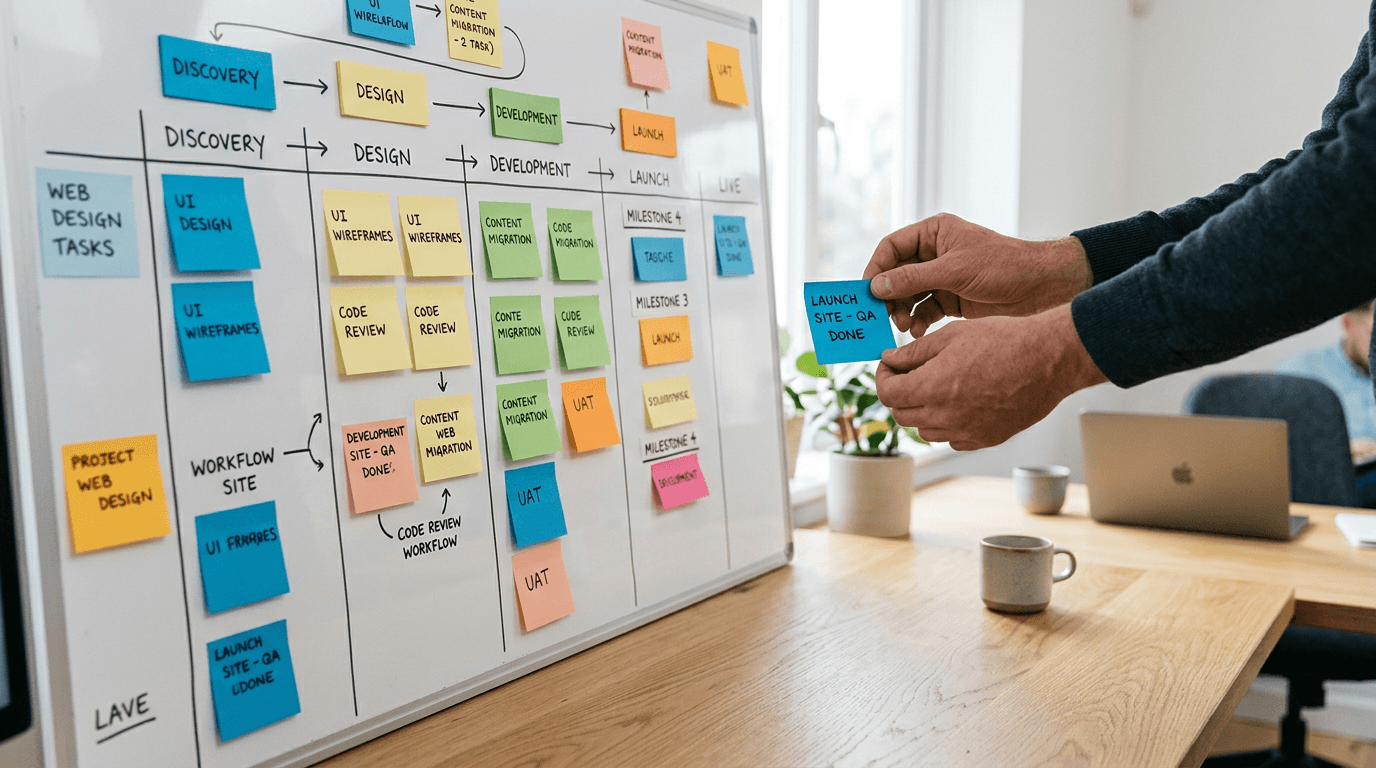
Evaluating local agencies for a site rebuild often starts with a focus on visual portfolios, completely ignoring how the project will actually be managed over its lifespan. When sourcing web design edmonton providers, the defining factor is rarely graphic design capability; it is the service and methodology model the agency employs to keep the build on track. Choosing a provider means choosing how you will communicate, how scope creep is handled, and how maintenance will occur after launch.
Quick Summary
Finding the right website design edmonton partner requires matching your internal capacity for project management with an agency's delivery methodology. An agency's service model dictates the pricing structure, the platform used, and the frequency of your involvement in the development cycle.
- Compare providers based on their distinct service delivery models.
- Understand whether you are paying for an agile process, managed hosting, or hourly support.
- Align the agency's chosen platform (like Webflow or WordPress) with your team's technical comfort.
- Account for ongoing costs like retainer-based SEO or managed maintenance.
Table of Contents
- How to Choose a Web Design Company in Edmonton
- 1. Pixel Army
- 2. Fairway
- 3. Web3
- 4. Paper Leaf
- Matching Your Situation to the Right Provider
| Product | Service Model | Features | Pros | Cons | Target Audience |
|---|---|---|---|---|---|
| Pixel Army | Full-Service Tiered | Custom responsive design, digital marketing, initial discovery | Clear pricing tiers, structured launch paths, free discovery | Rigid starting limits, higher custom ceiling, full-service dependency | Teams needing structured, budget-bracketed projects |
| Fairway | Managed Platform Retainer | Webflow development, website audits, managed hosting | Platform-specific focus, ongoing design time, complimentary audits | Limited to Webflow, recurring dependency, capped monthly design | Brands seeking ongoing iteration on a visual platform |
| Web3 | Hourly & Ongoing Support | WordPress development, hourly billing, SEO plans | Clear hourly rates, modular SEO options, phone support | Split service focus, ongoing costs scale up, variable hourly costs | Businesses looking for combined design and search visibility |
| Paper Leaf | Agile Retainer | Custom WordPress, Kanban methodology, bi-weekly reviews | Transparent progression, regular check-ins, custom scope | Requires high client involvement, strict platform focus, meeting-heavy | Organizations with complex requirements and dedicated project managers |
How to Choose a Web Design Company in Edmonton
Selecting a web design company in edmonton means identifying the specific bottleneck your internal team is facing. The criteria that actually separate these options are not their design aesthetics, which are highly subjective, but their commercial and operational models. These methodologies define how your budget translates into development hours and long-term support.
We categorize these agencies along a single classification axis: Service Model.
The Full-Service Tiered category applies to agencies that bracket their offerings into distinct, pre-priced packages based on the level of customization. This suits organizations that need rigid budget predictability.
The Managed Platform Retainer category covers providers that bundle the initial build with ongoing hosting and guaranteed monthly design iteration time.
The Hourly & Ongoing Support category fits agencies that offer a lower entry price for the build, but rely on fixed hourly rates and separate monthly retainers for things like search engine optimization and phone support.
The Agile Retainer category identifies agencies managing complex builds through formal agile frameworks, requiring continuous, scheduled client involvement.
Practical rule: Never evaluate an agency's initial build cost without simultaneously pricing out their ongoing maintenance and support structures for the first twelve months post-launch.
1. Pixel Army
Many businesses initiate their search requiring absolute budget clarity before a single line of code is written. Pixel Army operates within the Full-Service Tiered category, offering custom responsive website design and digital marketing out of their Edmonton office.
They categorize projects into distinct pricing brackets based on the level of bespoke design required. According to their published pricing, a Quick Launch website package starts at $4,500.00. Organizations requiring more tailored layouts can access a Semi-Custom design project starting at $6,500.00. For entirely unique builds, a completely custom website designed 'From Scratch' starts at $11,500.00. Prospective clients begin the engagement with an initial project discovery meeting, which is offered free of charge to outline scope.
Tiered packages structure the delivery scope
The rigid pricing boundaries mean clients must accurately diagnose their actual customization needs during that free discovery phase. If a business opts for the Quick Launch tier but introduces complex functional requirements mid-build, the tiered model fractures. Teams with fluid, undefined specifications should hesitate before locking into a bracketed package.
I would evaluate this option when internal procurement policies require strictly delineated project tiers before budget approval.
Pros
- Provides transparent baseline pricing for distinct project sizes.
- Initial discovery phase requires zero upfront capital.
- Covers both development and ongoing digital marketing.
Cons
- Starting prices represent the floor, not the final invoice.
- Custom builds sit at a significantly higher price point.
- Bracketed tiers punish mid-project scope changes.
2. Fairway
Contrasting with agencies that rely heavily on traditional CMS platforms, some teams specifically seek modern, visual-first infrastructure. Fairway is a brand-driven web design agency that builds entirely within the Managed Platform Retainer category.
Every website they deliver is developed and built specifically on the Webflow platform. Custom website projects here run in a pricing sweet spot from $2,995 to $11,995. The relationship extends past the launch date through their hosting architecture. Managed hosting with Fairway includes 30 minutes of free design work per month for website changes. Before committing, prospective clients are offered a complimentary website audit free of charge to evaluate their existing digital footprint.
Managed hosting includes ongoing iterative design
Committing to this agency means committing to Webflow. If your organization relies on complex, legacy database integrations or prefers to self-host on internal servers, this infrastructure creates immediate friction. The 30 minutes of monthly design time is useful for minor iterations, but it cannot support major structural overhauls post-launch.
I would hold off on this if an in-house development team intends to take over backend management immediately after launch.
Pros
- Utilizes a modern, visual-first platform architecture.
- Hosting packages include guaranteed monthly design updates.
- Upfront audits provide immediate diagnostic value.
Cons
- Strict adherence to a single platform ecosystem.
- Monthly design allowance is strictly capped at half an hour.
- Pricing ceiling approaches enterprise-level budgets.
3. Web3
Search visibility is often the trigger event that sends organizations looking for a new digital footprint. Web3 addresses this by operating within the Hourly & Ongoing Support category, functioning as an Edmonton-based design and SEO agency specializing in WordPress.
Website design packages start at CA$3,000, establishing a relatively accessible floor for a WordPress build. Once launched, ongoing website hosting packages start at $40 per month and include phone support. For tasks outside the initial scope, standard services are billed at an hourly rate ranging from $70 to $150. Organizations focused on traffic acquisition can attach SEO plans starting at $800 per month.
Modular pricing separates design from ongoing visibility
Because the pricing is modular, the initial $3,000 baseline only covers the static build. A client expecting sustained search rankings must absorb the $800 monthly SEO retainer and the variable $70-$150 hourly rates for structural updates. This separates the cost of building the tool from the cost of driving traffic to it. Teams unprepared for these distinct, recurring line items often stall post-launch.
This fits organizations that prefer to isolate their capital expenditure for the build from their operational expenditure for marketing.
Pros
- Accessible entry price for standard design packages.
- Hosting includes direct phone support capabilities.
- Clear separation between development and search optimization costs.
Cons
- Hourly rates fluctuate significantly based on the service required.
- SEO retainers represent a substantial ongoing monthly commitment.
- Baseline design costs do not guarantee search visibility.
4. Paper Leaf
When a digital deployment involves multiple stakeholders, internal bottlenecks frequently derail traditional timelines. Paper Leaf manages this friction by operating strictly within the Agile Retainer category, focusing on custom website design and development.

They specialize exclusively in building custom websites on the WordPress platform. Rather than managing delivery through static milestones, projects are managed using Kanban as an agile methodology. This requires consistent alignment, meaning project progress review meetings are typically held with clients every two weeks.
Agile frameworks require dedicated client availability
The dependency here is time. An agile framework collapses if the client lacks a dedicated project owner capable of attending bi-weekly review meetings and approving iterative Kanban tasks. Organizations expecting to hand off a brief and receive a finished product months later will frustrate this process. It demands active, scheduled participation. If consolidating your scattered digital endpoints is the priority, integrating a link-in-bio platform might resolve immediate routing issues faster than a full custom build.
I would bypass this option if your internal team lacks the bandwidth to engage in recurring sprint reviews.
Pros
- Kanban framework provides total visibility into task progression.
- Bi-weekly reviews prevent scope drift.
- Deep specialization in custom WordPress environments.
Cons
- Requires intense, ongoing commitment from internal stakeholders.
- Not suitable for hands-off project management preferences.
- Exclusively tied to WordPress architecture.
Matching Your Situation to the Right Provider
Choosing the appropriate partner requires diagnosing your internal operational capacity and matching it to the correct Service Model.
For internal teams seeking budget finality before development begins, the Full-Service Tiered model establishes clear financial boundaries. This prevents cost overruns but demands rigorous initial planning to ensure all requirements fit within the chosen bracket.
Organizations without dedicated in-house design resources benefit heavily from the Managed Platform Retainer model. Securing guaranteed monthly design time ensures the platform remains updated without generating continuous, unpredictable hourly invoices.
Businesses that view their digital presence primarily as a lead generation tool should lean toward the Hourly & Ongoing Support category. By separating the initial WordPress build from a robust SEO retainer, you can scale marketing spend independently from development costs.
Complex technical requirements coupled with large internal stakeholder groups demand the Agile Retainer model. Applying Kanban methodologies to custom WordPress builds ensures that shifting priorities are managed iteratively, provided your team can commit to the meeting cadence.